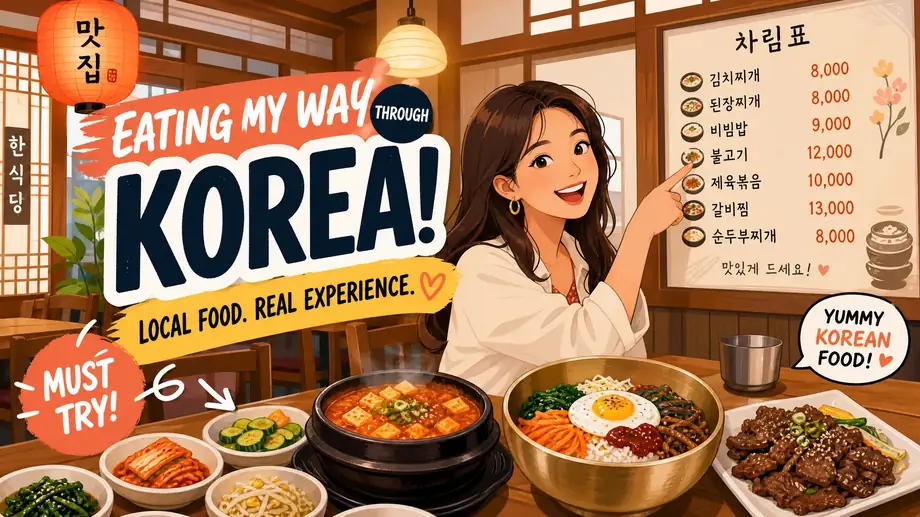
Eating out in Korea is one of the great joys of visiting the country. But walking into a busy Korean restaurant where the menu is only in Korean, the staff are calling out orders, and everyone seems to know exactly what they're doing — it can feel overwhelming at first.
Here's the good news: you only need about 5 phrases to handle 90% of restaurant situations in Korea. I've used these in everything from tiny local 식당 (sikdang) to upscale Korean BBQ spots, and they work every time.
📣 How to Call the Staff
The first thing you need to know is how to get someone's attention. In Korean restaurants, you call the staff — they don't hover around your table waiting.
| Expression | Used when | Audio |
|---|---|---|
| 저기요! | Neutral, works anywhere — safest option | |
| 사장님! | Respectful/flattering — calling the owner/boss | |
| 이모님! | Warm & familiar — casual local restaurants only |
Culture note: 이모님 literally means "aunt" — but in Korea, calling an older woman working at a small restaurant "이모님" is a warm, familiar way to show closeness. It's a very Korean thing. Don't use it at a fancy restaurant, but at a local 식당 or pojangmacha, it's perfectly natural.
🍽️ Essential Ordering Phrases
| Situation | Korean | Pronunciation | Meaning | Audio |
|---|---|---|---|---|
| Ordering | 이거 주세요 | i-geo ju-se-yo | This one, please (point at menu) | |
| More side dishes | 반찬 더 주세요 | ban-chan deo ju-se-yo | More side dishes, please | |
| Complimenting | 맛있어요! | mas-it-eo-yo | It's delicious! | |
| Paying | 계산해 주세요 | gye-san-hae ju-se-yo | Please process the payment |
🥗 What is 반찬 (Banchan)?
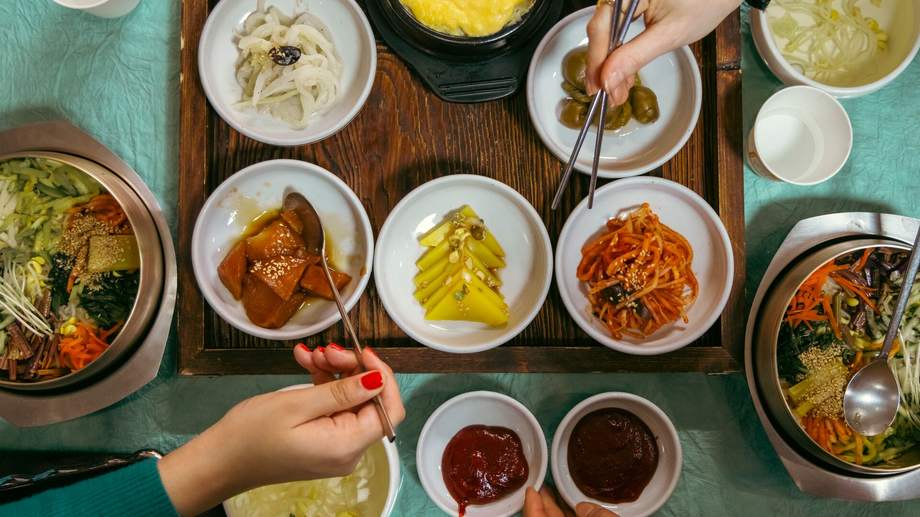
반찬 (banchan) are the small side dishes that come with every Korean meal — kimchi, spinach, bean sprouts, pickled radish, fish cake, and more. They're placed on the table before your main dish arrives, and they're part of what makes Korean food culture so unique. You eat them alongside your rice and soup throughout the meal, not as a separate course.
One important thing to know: banchan is not always free-refill. At traditional home-style restaurants (백반집) and many local 식당, you can ask for more and they'll happily refill. But in some restaurants — especially more modern or upscale ones — refills may not be offered. When in doubt, just ask: "반찬 더 주세요" — if they can, they will!
💳 How to Pay in Korea
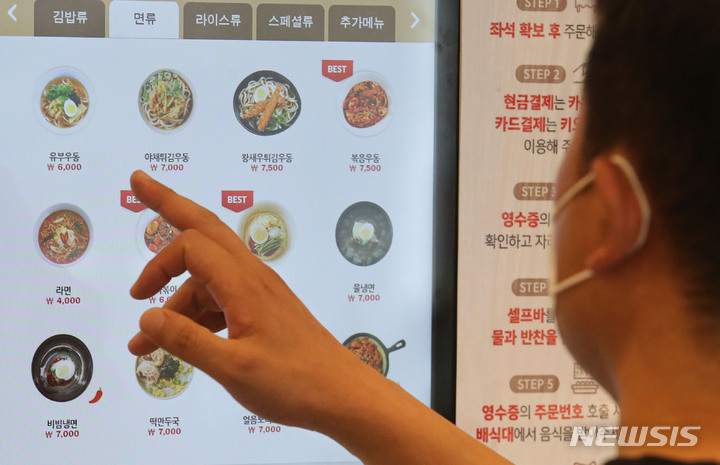
Paying at a Korean restaurant is different from what you might expect — and it's changed a lot in recent years. Here's what you'll actually encounter:
🖥️ Kiosk (키오스크) — Pre-pay
Many restaurants now have a self-order kiosk at the entrance. You order and pay before sitting down. Common at fast-casual chains and busy lunch spots.
📱 Table Tablet — Order & Pay at Seat
Some restaurants have a tablet at every table. You order and pay without ever calling a staff member. Very common at Korean BBQ chains.
🔢 Table Number — Pay on the Way Out
You order via kiosk or staff, then pay at the counter when leaving. Just tell them your table number or point to your table: "저기 계산해 주세요"
🏠 Small Local Restaurant
At small family-run places, just stand up to leave and the 사장님 will often handle it automatically. No need to say anything — they're watching! 😄
Not sure which system the restaurant uses? Just look around when you enter — if there's a kiosk by the door, use it first. If not, find a seat and call the staff with 저기요! — they'll guide you from there.
🥩 Korean BBQ Phrases You Actually Need
Korean BBQ (삼겹살, 갈비, etc.) has its own rhythm. These are the phrases that actually come up at the table:
| Korean | Pronunciation | Meaning | Audio |
|---|---|---|---|
| 잘 먹겠습니다 | jal meok-get-seum-ni-da | I will eat well (before eating) | |
| 불 조절해 주세요 | bul jo-jeol-hae ju-se-yo | Please adjust the flame | |
| 불판 갈아주세요 | bul-pan ga-ra-ju-se-yo | Please change the grill plate | |
| 쌈장 더 주세요 | ssam-jang deo ju-se-yo | More ssamjang, please | |
| 상추 더 주세요 | sang-chu deo ju-se-yo | More lettuce wraps, please | |
| 잘 먹었습니다 | jal meok-eo-sseum-ni-da | I ate well (after eating) |
💡 Rian's Tip — What is 쌈장? And the "___ 더 주세요" pattern
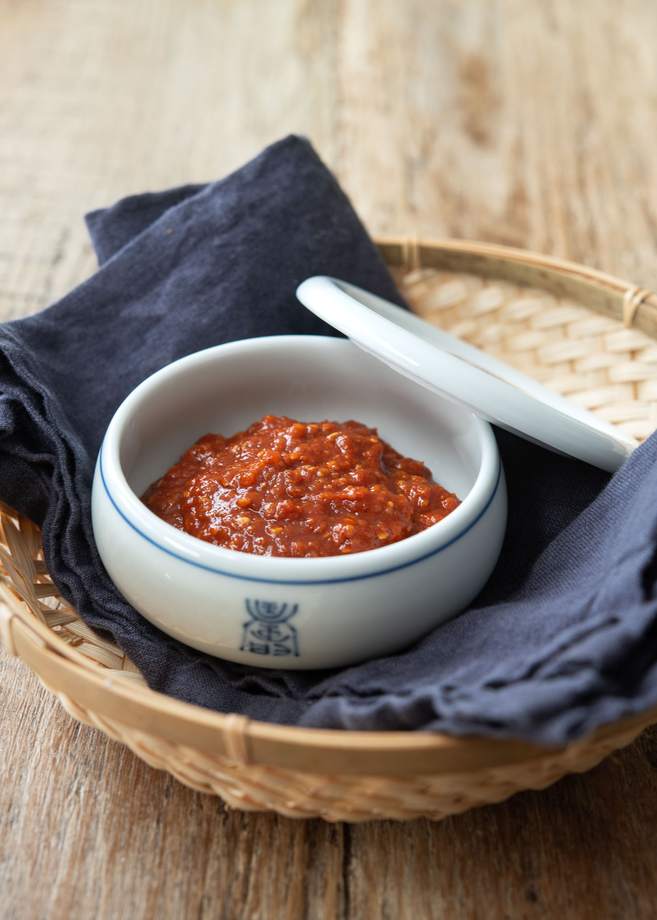
쌈장 (ssamjang) is the dark, savory-spicy paste that comes with Korean BBQ. Made from fermented soybean paste (된장) and red pepper paste (고추장), mixed with garlic and sesame oil. You wrap grilled meat in a lettuce leaf, add a small dab of ssamjang, maybe some garlic — and eat it in one bite. That's the full Korean BBQ experience.
The pattern "___ 더 주세요" (more ___, please) is super useful. Things worth asking for more of:
쌈장 더 주세요 · 상추 더 주세요 · 깻잎 더 주세요 (perilla leaves) · 마늘 더 주세요 (garlic) · 물 더 주세요 (water)
Grammar note: 잘 먹겠습니다 uses 겠 (future intention) — "I will eat well." 잘 먹었습니다 uses 었 (past tense) — "I ate well." Same structure, different tense. A tiny grammar lesson hidden in everyday Korean culture.
Related posts:
→ "Where is ___?" — The Only Korean Phrase You Need at Incheon Airport
→ How to Take a Taxi in Seoul: Korean Phrases You Actually Need