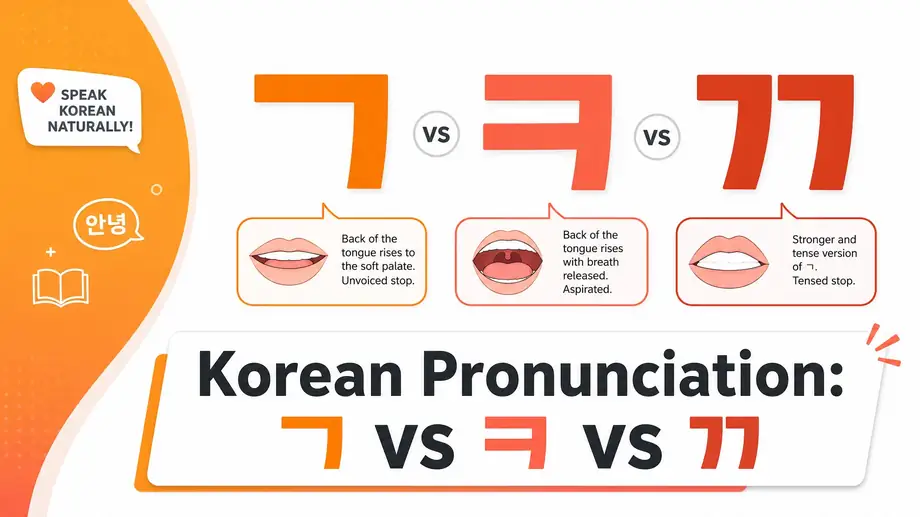
Learning Hangul can begin with something simple: seeing a letter, hearing its name, and trying it yourself. Gachi Korea’s Korean consonant song introduces the names of the 14 basic Hangul consonants, from ㄱ, 기역 (giyeok), to ㅎ, 히읗 (hieut). Use it as a friendly first step into the Korean alphabet, then turn the melody into a short, active practice routine.
You do not need to be a good singer. You do not need to memorize every letter before pressing play. Start with a few recognizable shapes, follow the Korean names, and return to the letters that need another listen. Below, you will find the video, a consonant-name chart, and practical ways to study with the song without becoming dependent on the tune.
What are the 14 basic Korean consonants?
The basic consonants are ㄱ ㄴ ㄷ ㄹ ㅁ ㅂ ㅅ ㅇ ㅈ ㅊ ㅋ ㅌ ㅍ ㅎ. Korean also has five double consonant letters, which are a separate learning step. This song keeps the starting set manageable by concentrating on the 14 basic letters.
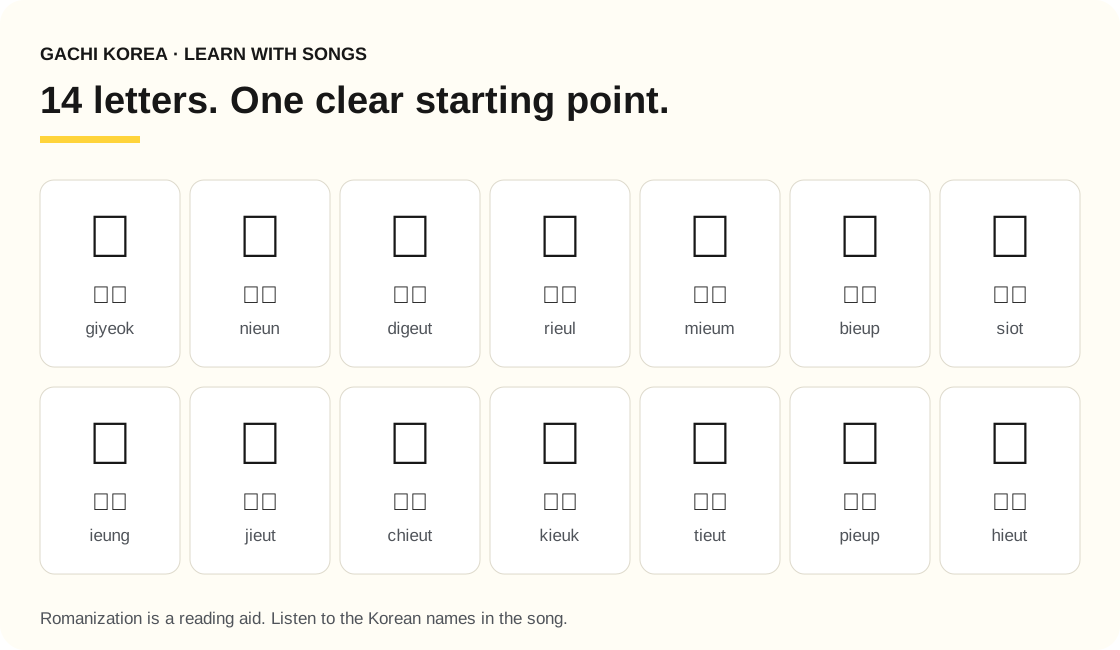
| Letter | Korean name | Romanized name |
|---|---|---|
| ㄱ | 기역 | giyeok |
| ㄴ | 니은 | nieun |
| ㄷ | 디귿 | digeut |
| ㄹ | 리을 | rieul |
| ㅁ | 미음 | mieum |
| ㅂ | 비읍 | bieup |
| ㅅ | 시옷 | siot |
| ㅇ | 이응 | ieung |
| ㅈ | 지읒 | jieut |
| ㅊ | 치읓 | chieut |
| ㅋ | 키읔 | kieuk |
| ㅌ | 티읕 | tieut |
| ㅍ | 피읖 | pieup |
| ㅎ | 히읗 | hieut |
These Korean names follow the standard names listed by the National Institute of Korean Language. Romanization is a reading aid, not a set of exact English pronunciation instructions. Listen to the Korean audio rather than guessing how an English speaker might pronounce each spelling.
Why learn Korean consonants with a song?
A song gives you a repeatable way to meet the same letters again. A familiar musical phrase can serve as a reminder of what comes next, while the visible letter gives your attention somewhere specific to go. For a beginner who finds a long alphabet list intimidating, that can make the first practice session feel more approachable.
There is also relevant research, although it should be interpreted carefully. In a study by Ludke, Ferreira, and Overy, 60 adults practiced unfamiliar Hungarian phrases through speaking, rhythmic speaking, or singing. The singing group performed better on some short-term recall measures. The study supports the potential of singing for remembering unfamiliar language; it does not establish that this particular Hangul song improves learning or that songs replace other instruction. Read the research summary.
For this lesson, the practical value comes from what you do with the music. Pointing to a letter makes listening purposeful. Singing its name gives you a chance to respond. Pausing and remembering it without the melody helps you check what you actually know. Listening in the background may be enjoyable, but an active task gives you clearer evidence of your progress.
Songs are not limited to children. An adult beginner can use a short song as a memory prompt and then move straight into independent recognition. You can also speak along softly instead of singing. The goal is learning the letter names, not performing the music.
Watch the Korean consonant song
Watch and sing along on YouTube. For your first viewing, focus on noticing the letters rather than keeping up perfectly. Pause whenever you need more time to respond.
This is a consonant-name song, not a complete course in Korean pronunciation. That distinction matters: recognizing and naming a letter prepares you for later reading and writing, but you will also need to learn how that letter works inside syllables and words.
A letter’s name is not the same as its sound
In English, the name of the letter B is “bee,” but that whole word is not pronounced every time B appears. Korean has the same important distinction between naming a letter and using it in a word.
For example, ㄱ is called 기역, but 가 is read as the syllable ga, not as “giyeok plus a.” Korean letters combine into syllable blocks. The exact sound of a consonant can also depend on its position and surrounding sounds, so English sound labels are only rough starting points.
Another useful example is ㅇ, 이응. At the beginning of a syllable, as in 아, it does not represent a consonant sound. At the end of a syllable, as in 강, it represents an “ng” sound. You do not need to master every sound rule today; simply remember that a name chart is not a complete pronunciation chart.
For more context, continue to our guide to the 14 basic Korean consonants. Keep this song as your letter-name practice and use syllable and word examples for the next stage.
How to study with the song: four practical steps
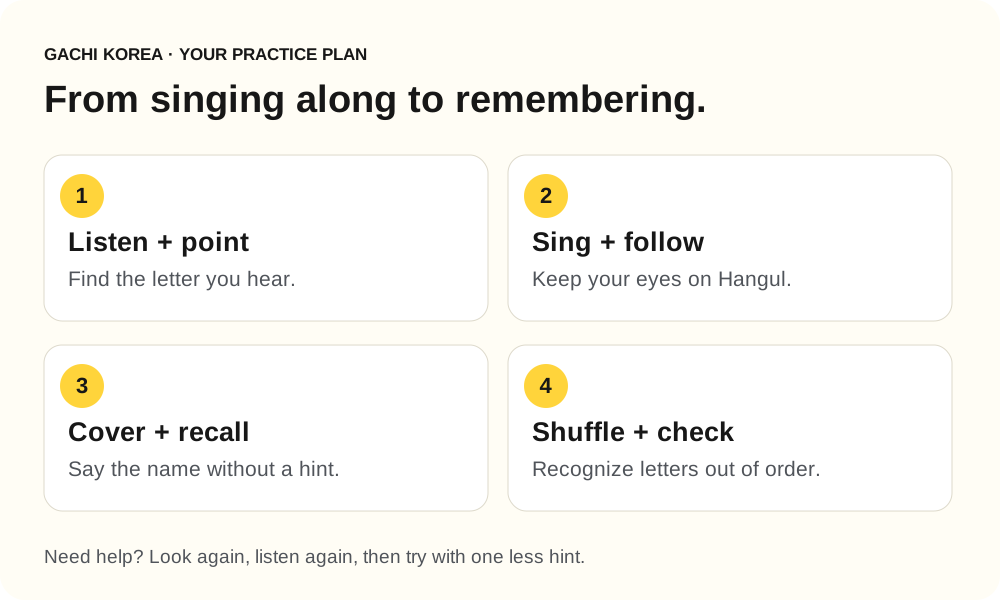
1. Listen and find the letter
Choose a small group, such as ㄱ, ㄴ, ㄷ, ㄹ. Listen to the names and point to the matching letters in the chart. You are checking whether you can connect what you hear with what you see. If four feels difficult, start with two. Finish a small group successfully before adding more.
2. Sing or speak with the model
Play the relevant section again and join in. Keep looking at Hangul rather than only at the romanized names. If the pace feels quick, pause after a name and repeat it at a comfortable speed. It is fine to practice without the beat before trying the musical phrase again.
3. Cover the names and try to remember
Look at ㄱ while covering 기역 / giyeok. Can you say its name? Reveal the answer, check against the audio, and try again. A forgotten name is useful information: it tells you which letter needs another example. Return to the model briefly, then make another attempt without the hint.
4. Change the order
Try ㅁ, ㄱ, ㅎ, ㄴ instead of always beginning at ㄱ. If you can only answer by singing the entire sequence from the start, the melody is still doing much of the work. Keep the song as support, but add a few mixed-order questions so the letters become recognizable individually.
A reasonable first-session goal is recognizing a small set reliably. You do not need to finish all 14 in one sitting. On your next visit, check a few familiar letters before adding new ones. Let your responses guide the pace instead of treating a fixed number of days as a mastery deadline.
Try a quick consonant-name check
Without looking at the full chart, try these three tasks:
- Choose: Which letter is 니은: ㄱ, ㄴ, or ㄷ?
- Recall: What is the name of ㅁ?
- Compare: Point to ㄱ, then ㅋ. Can you name both?
Show the answers
1. ㄴ — 니은 (nieun).
2. 미음 (mieum).
3. ㄱ — 기역 (giyeok); ㅋ — 키읔 (kieuk).
If you missed one, listen to that name again and repeat the question with the answer hidden.
For a teacher or study partner, use the same idea with a few homemade letter cards. Say one name, ask the learner to choose a card, and then switch roles. Keep corrections brief: show the correct letter, model its name, and offer another attempt. Accuracy and a comfortable response time matter more than turning the activity into a race.
Common questions about learning Hangul through songs
Is this a Korean alphabet song or a consonant song?
It is a Korean consonant song focusing on 14 basic letter names. The full Hangul system also includes vowels and double consonants. Calling it a consonant song makes its scope clearer for a beginner searching for the right lesson.
Should I memorize the English spellings?
No. The romanized names are temporary support. As you become comfortable, look at the Hangul letter and listen for the Korean name directly. You can cover the romanization first while keeping the Korean names visible, then cover both for a more independent check.
Can I learn to read Korean just by singing this song?
The song is a starting point. Reading also requires vowel knowledge, syllable building, and practice connecting written words with their spoken forms. A learner who knows the name 기역 still needs to learn how ㄱ works in 가, 고, and other syllables.
Should I practice writing at the same time?
You can connect the activities, but give each one a clear purpose. First recognize the letter and its name; then study its stroke order and practice writing it. Copying a shape from memory is a different task from singing its name, so slow down and check the shape carefully during handwriting practice.
Your next step with Gachi Korea
Return to the Korean consonant song and choose one small group to practice today. Then visit Start Here: Hangul Step by Step to see how songs, writing, syllable building, and review fit together. The curriculum distinguishes available lessons from planned lessons, so you can see what is ready to use now.
When you are ready to explore vowels, our Korean vowels guide is another useful reference. Take one manageable step at a time: hear a name, find its letter, respond with support, and try again independently.
Subscribe to Gachi Korea on YouTube for upcoming Korean songs and step-by-step Hangul lessons. Bring the music into your routine, but keep checking the letters beyond the melody. That is how this first song can become part of a broader Korean learning journey.