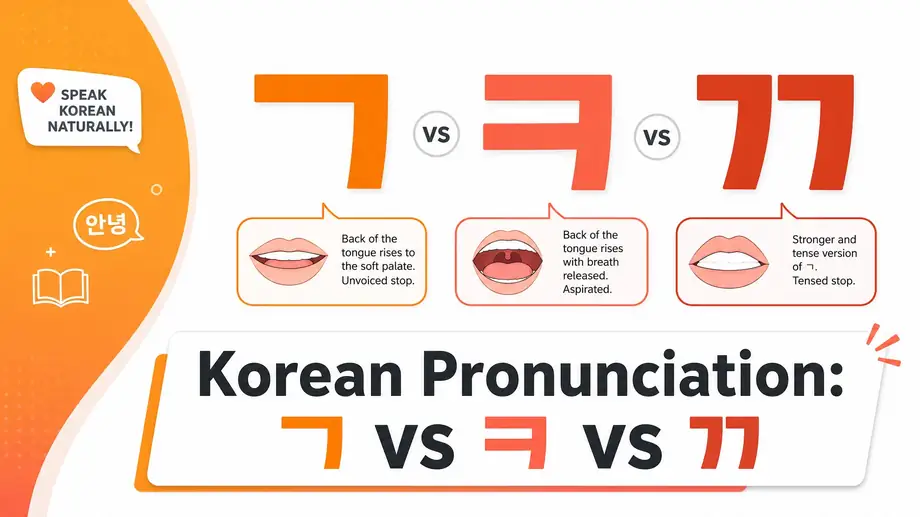
Korean has three types of consonants that English doesn't distinguish: plain (평음), aspirated (격음), and tense (경음). For the ㄱ family, that means ㄱ, ㅋ, and ㄲ — and getting these wrong can completely change the meaning of a word. This is one of the most common pronunciation challenges for Korean learners, so let's break it down clearly.
🔤 The Three Types: What's the Difference?
Korean consonants in the ㄱ family are produced in the same place in your mouth — the back of the tongue rises to meet the soft palate (velum). What changes is the amount of air and muscle tension you use.
| Consonant | Type | Air | Feel | English Closest |
|---|---|---|---|---|
| ㄱ | Plain 평음 | Low | Soft, neutral | Like "g" in "go" (but softer) |
| ㅋ | Aspirated 격음 | High (puff of air) | Breathy, open | Like "k" in "kite" (strong puff) |
| ㄲ | Tense 경음 | None (held tight) | Tense, sharp, abrupt | No English equivalent |
💡 Rian's Tip — The Paper Test
Hold a thin piece of paper in front of your mouth. Say ㄱ → paper barely moves. Say ㅋ → paper blows forward. Say ㄲ → paper stays completely still. This is the fastest way to feel the difference physically!
⚠️ Why It Matters: Minimal Pairs
These three sounds create minimal pairs — words that are identical except for this one sound, but have completely different meanings. Getting them wrong doesn't just sound foreign; it can cause real confusion.
| ㄱ (plain) | ㅋ (aspirated) | ㄲ (tense) |
|---|---|---|
| 가다 — to go | 카드 — card | 까다 — to peel / to be picky |
| 고기 — meat | 코 — nose | 꼬리 — tail |
| 구두 — formal shoes | 크다 — to be big | 꾸다 — to dream / to borrow |
🗣️ How to Produce Each Sound
ㄱ (Plain) — Raise the back of your tongue to your soft palate and release it with minimal air. Think of the "g" in "good" but with less voicing. It's the most neutral of the three.
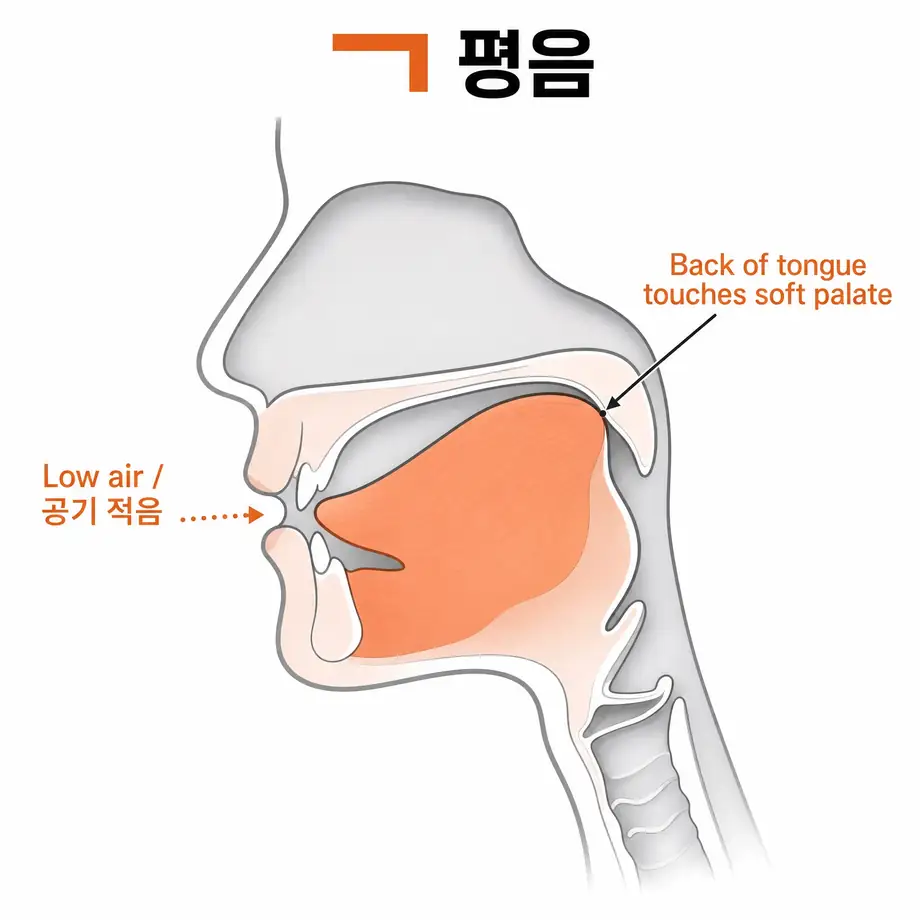
ㄱ 평음 — 혀 뒤쪽이 연구개에 닿고 공기는 최소
ㅋ (Aspirated) — Same tongue position, but push a strong puff of air out as you release. It should feel like you're fogging up a mirror. The "k" in "kite" or "car" in English is close, but Korean ㅋ is even more aspirated.
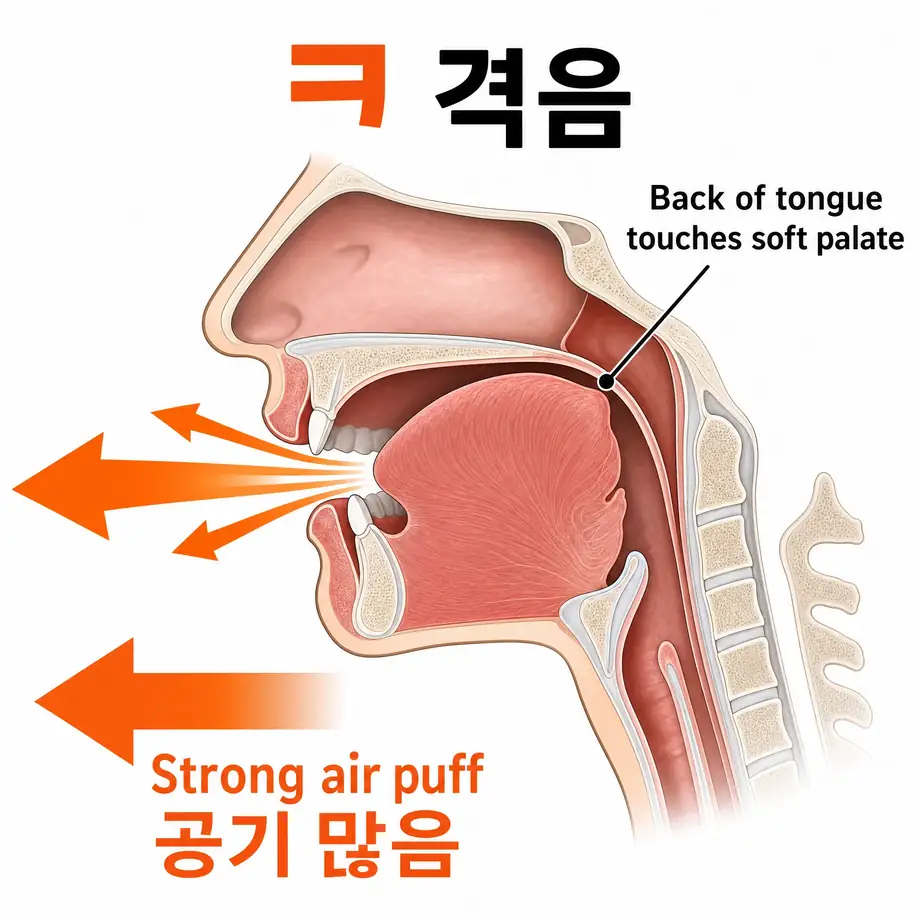
ㅋ 격음 — 강한 공기가 입 밖으로 나옴
ㄲ (Tense) — This one has no English equivalent. Tighten your throat and the muscles around your larynx before you make the sound. Hold the tension, then release abruptly — with no air. It sounds sharp and almost like you're suppressing the sound. Native speakers often describe it as feeling "stiff" or "held."
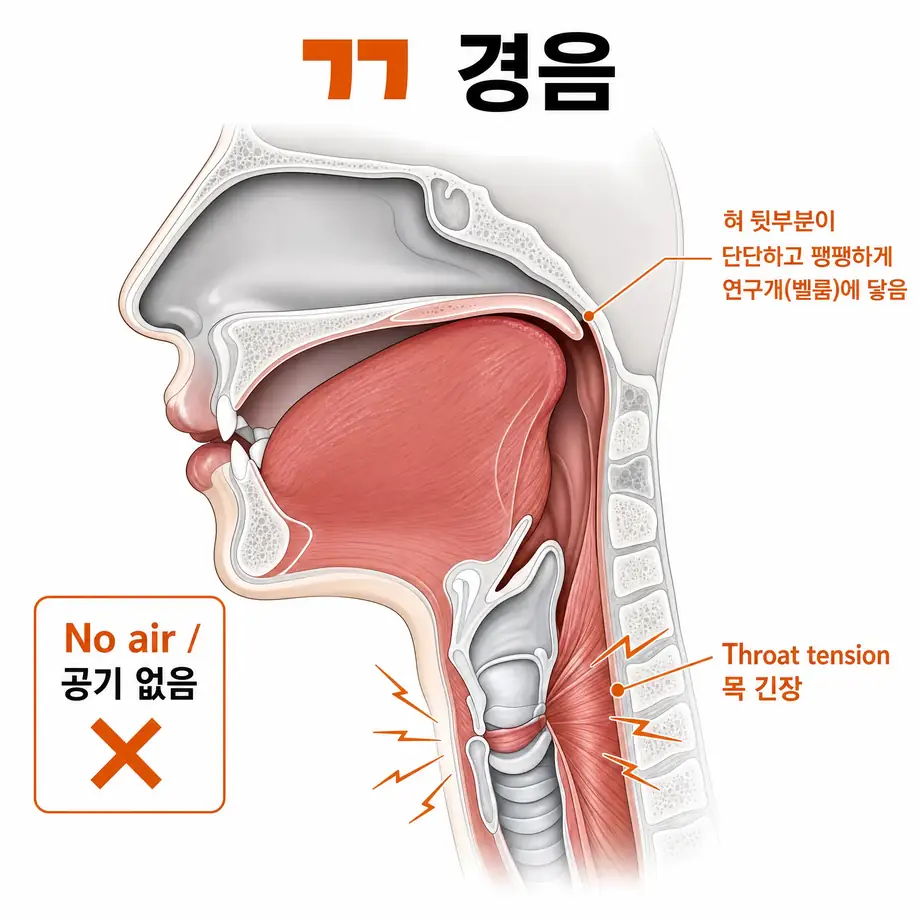
ㄲ 경음 — 공기 없이 목 근육을 긴장시켜 발음
💡 Rian's Tip — The Throat Tension Trick for ㄲ
Try whispering the word "ski" — the "k" in "ski" has no aspiration (unlike "kite"). That's closer to ㄲ than anything else in English. Now add throat tension and make it even more abrupt. That's ㄲ!
🎯 Common Mistakes by Learners
- Treating ㄱ and ㄲ as the same — Many learners hear both as "g" and don't produce the tense quality of ㄲ. Listen carefully: 가다 (to go) vs 까다 (to peel/be picky).
- Over-aspirating ㄱ — English speakers often add too much air to ㄱ, making it sound like ㅋ. Keep ㄱ soft and neutral.
- Not enough tension for ㄲ — The tense consonant requires real physical effort. If it doesn't feel slightly uncomfortable, you're probably not tensing enough.
- Ignoring context — ㄱ can sound more like ㄲ when it comes after a nasal (ㄴ, ㅁ) or at the end of a syllable. Korean pronunciation is highly context-dependent.
💡 Rian's Tip — Listen First, Speak Later
Before you try to produce these sounds, spend time just listening to minimal pairs. Your brain needs to build a phonemic category for ㄲ — a sound that literally doesn't exist in English. Apps like Naver Dictionary have native speaker audio for every word. Listen to 가다 vs 까다 ten times before you try to say them.
📝 Quick Summary
- ㄱ = Plain, soft, low air — like "g" in "go"
- ㅋ = Aspirated, breathy, strong puff of air — like "k" in "kite"
- ㄲ = Tense, sharp, no air, throat tension — no English equivalent
- Use the paper test to physically feel the difference
- Practice minimal pairs: 가다 / 까다, 고기 / 꼬리, 구두 / 꾸다
Now use the pronunciation practice tool below to train your ear and mouth. Listen to each word, then record yourself and check your accuracy. Consistent repetition is the only way to rewire your phonemic perception!