You recognise ㄱ when you see it. But can you write it without looking? That small gap between recognising a letter and producing it yourself is where Hangul writing practice becomes useful.
The Gachi Korea Korean Consonant Writing Workbook is a companion for your first steps in Korean handwriting. Use it alongside our consonant writing video and free online stroke-order tool to move from watching a model to practising on paper, checking your work and trying again from memory.
Make your next Korean lesson a writing session.
Explore the workbook preview and current purchase details in our Etsy shop.
Shop Korean Workbooks on EtsyWho is this Korean consonant workbook for?
Start here if you are a beginner who wants to practise writing Korean consonants, a returning learner who still mixes up similar shapes, or a self-study learner looking for something to do after watching a Hangul lesson. You do not need to know lots of Korean words before beginning.
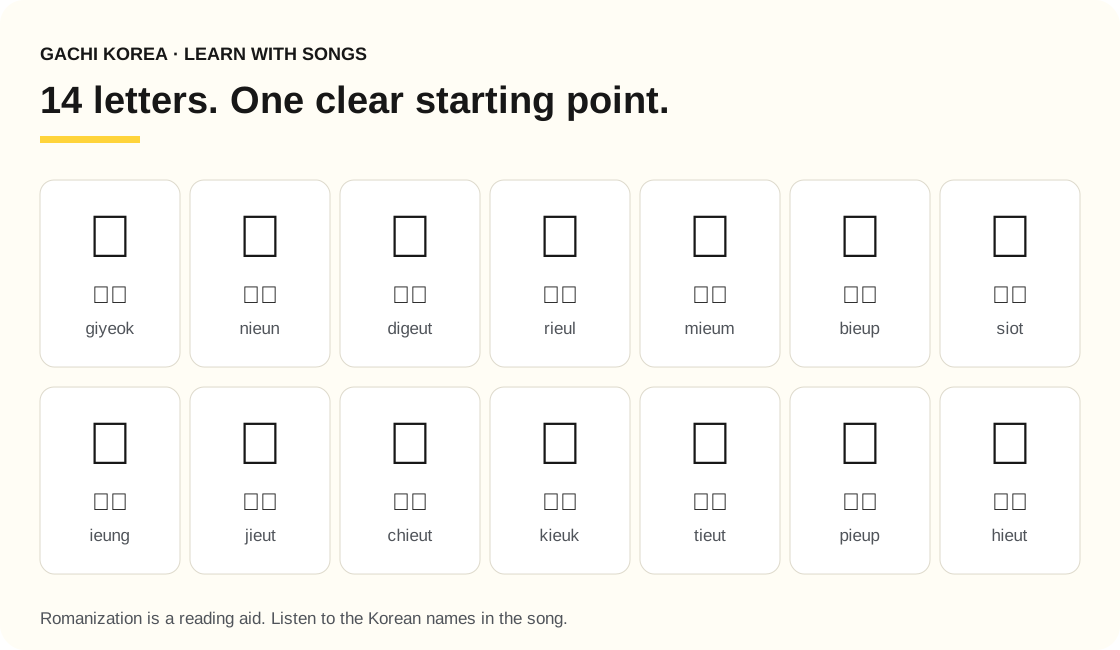
The focus here is consonant handwriting. The 14 basic consonants are ㄱ, ㄴ, ㄷ, ㄹ, ㅁ, ㅂ, ㅅ, ㅇ, ㅈ, ㅊ, ㅋ, ㅌ, ㅍ and ㅎ. Learning these is one part of learning Hangul; vowels, double consonants and syllable building are further steps. If you would like an introduction to letter names first, try our Korean consonant song and chart.
Turn copying into independent writing
A page of neat copies can feel satisfying. The more useful question is what happens when you cover the example. Can you remember the shape, where to start and how the strokes connect?
Use the workbook with three clear tasks: write, compare and recall. These are ways to use your study time, not a race to finish every page. Work with a small group of letters and return to the ones that still need a model.
1. Watch, then write
Choose three or four consonants. Watch the writing video below and notice the starting point and direction of each stroke. Pause before copying so that you can make one deliberate attempt instead of rushing to keep up. Use the online tool if you want to watch the same letter again.
Aim for a recognisable shape with clear proportions. Handwriting does not need to look exactly like a printed font. Check a confusing corner or missing stroke before filling a whole row with the same mistake.
2. Compare similar consonants
Place related shapes side by side. For example, look at ㄱ and ㅋ, ㄷ and ㅌ, or ㅈ and ㅊ. Point to the extra stroke before writing each letter. Then ask yourself which one you have written.
This is a visual comparison, not a complete pronunciation lesson. Similar-looking letters can represent different sounds. For now, the writing task is to notice the difference and reproduce each shape clearly. Our guide to Korean consonants provides a broader starting point for reading.
3. Cover the model and recall
After a few supported attempts, cover the example. Write one letter from memory, reveal the model and compare. If something is missing, correct that detail and try once more. You can do this on a separate piece of paper beside your workbook.
Change the order occasionally. Try ㅁ, ㄱ and ㅎ rather than always beginning at ㄱ and moving through the alphabet. This helps you check whether you recognise each letter independently of its position in a familiar sequence.
A simple 10-minute Hangul practice routine
- Minutes 1–2: Choose a small group and watch the stroke-order demonstration.
- Minutes 3–5: Practise writing the letters slowly, checking each attempt.
- Minutes 6–7: Compare two similar shapes and identify what changes.
- Minutes 8–9: Cover the examples and write from memory.
- Minute 10: Check your work and mark one letter to revisit next time.
Treat this as a flexible routine. If one letter needs more attention, stay with it. On your next study day, try a quick memory check before opening the model. Your own writing will show you where to spend your time.
Watch the Korean consonant writing lesson
Keep your workbook or a sheet of paper beside you. This Gachi Korea lesson takes you through the 14 basic consonants from ㄱ to ㅎ, with stroke-order guidance and time to try writing. Pause whenever you need longer.
Watch the consonant writing lesson on YouTube.
Try the free online stroke-order practice tool
Want another look at a movement before writing it on paper? Open our Stroke Order Practice tool, choose the letter you are working on and review the demonstration. Then return to your workbook and try without the animation.
Practise Hangul stroke order online
Use the animated model to check a letter, then put it into practice on paper.
Open the free writing toolQuestions before you start
Can I use the workbook as an adult beginner?
Yes. Choose a comfortable pace and use the video as a model whenever you need it. The task is the same at any age: notice the form, write it and check what you can remember.
Do I need to buy the workbook to watch the lesson?
No. The video and online tool are free to use. The workbook is a paid companion for learners who want to continue practising on paper. You can try the lesson with ordinary paper first and view the workbook on Etsy when you are ready.
Will consonant practice teach me the whole Korean alphabet?
Consonants are a starting point. You will also need vowels and practice combining letters into syllable blocks. Follow the Gachi Korea Hangul learning path to see how these stages fit together.
Where can I see the workbook preview and price?
Visit our Etsy shop and open the Korean Consonant Writing Workbook listing for the product images, current price and purchase details. Check those details before ordering so you know exactly what you are buying.
Ready to practise Korean handwriting?
Give your next lesson a small, clear goal: write a few consonants with a model, then try them independently. Keep the video for guidance, the online tool for checking movements and the workbook beside you for writing practice.
Browse the Gachi Korea Workbook Shop on Etsy
Learn one shape. Write it yourself. Come back and see what you remember.