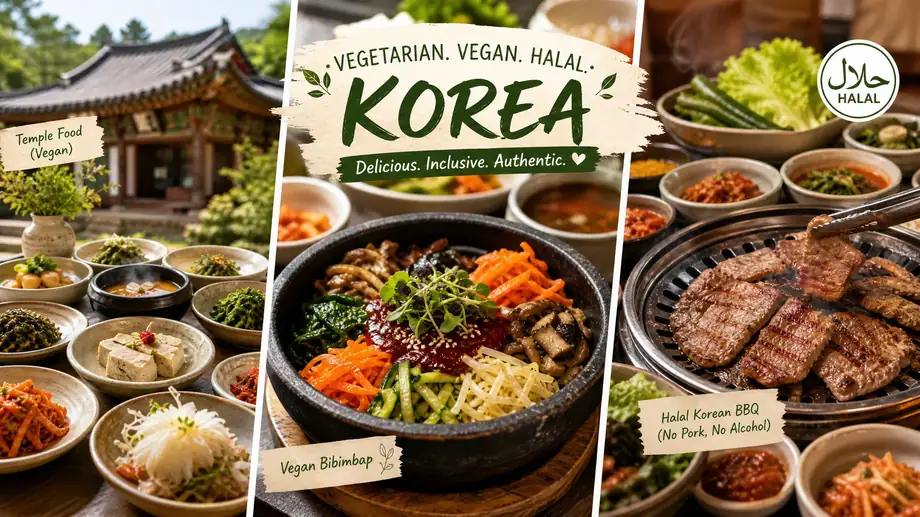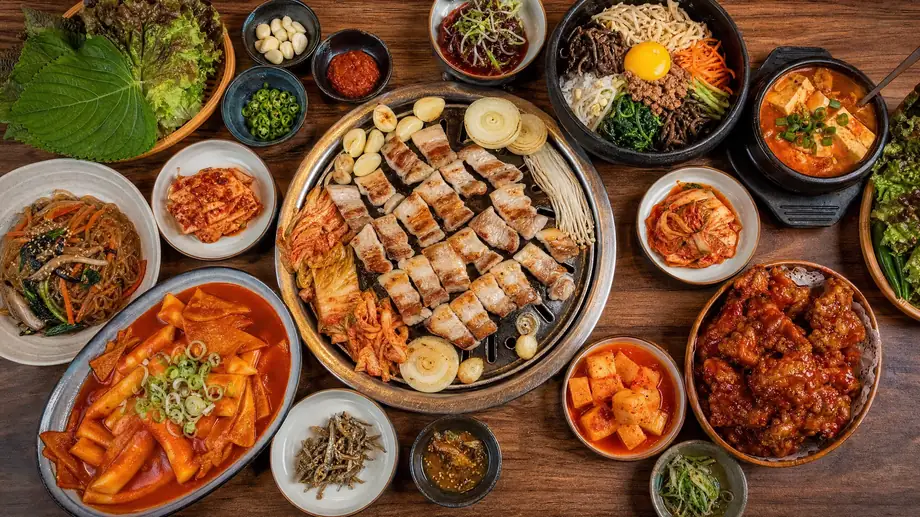
So you're heading to Korea and you've seen all the videos — people grilling meat at the table, slurping noodles, eating bright red rice cakes on the street. It looks incredible. But when you actually land and walk into a restaurant, the menu is all in Korean, everyone around you seems to know exactly what they're doing, and you have zero idea where to start.
Been there. This guide is for you. I'll walk you through the Korean foods that foreigners absolutely love — and more importantly, I'll be honest about which ones are actually popular with Koreans too, and which ones are kind of… a tourist thing. No judgment. Just real talk.
💡 Rian's Tip
One thing I always tell people: Korean food culture is about sharing. Most dishes are meant to be eaten together. Don't be shy about ordering multiple things for the table — that's literally how it's supposed to work.
🥩 #1 Korean BBQ (삼겹살 · Samgyeopsal)
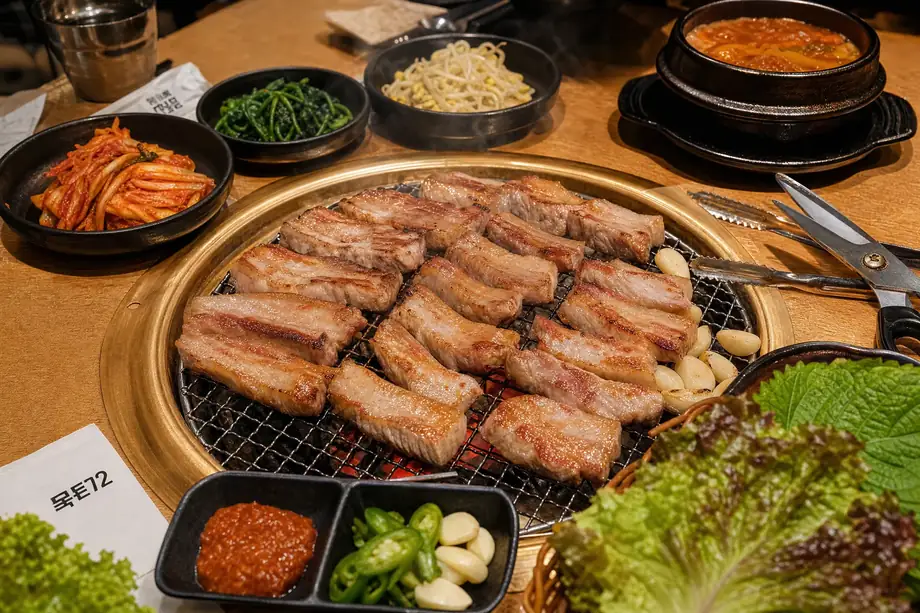
This is the one everyone comes for, and honestly? It lives up to the hype. Thick slices of pork belly grilled right at your table over charcoal or gas, then wrapped in a lettuce leaf with garlic, green onion salad, and a dab of fermented soybean paste (doenjang). The whole ritual of cooking it yourself, wrapping it, eating it in one bite — it's genuinely fun.
Do Koreans actually eat this? Yes — 100%. This is real Korean food. Koreans eat this for celebrations, after-work dinners, weekend nights out. It's not a tourist thing at all. The difference is that Koreans go to neighborhood spots with smoke-stained walls and no English menu, not the fancy Instagram places near Hongdae.
- Price range: ₩12,000–18,000 per person (including unlimited side dishes)
- Best time: Dinner, especially weekday evenings when it's less crowded
- Beginner tip: Ask for samgyeopsal (삼겹살) — pork belly. If you want beef, say galbi (갈비) or bulgogi (불고기)
- Don't miss: The doenjang jjigae (된장찌개) that comes with it — soybean paste stew, free on the side
💡 Rian's Tip
The fancy KBBQ places near tourist areas charge 2–3x more for the same quality. Find a spot in a local neighborhood (Mapo, Gongdeok, Mangwon area) and you'll eat better for half the price. Search "삼겹살" on Google Maps and look for places with 200+ Korean reviews.
🍗 #2 Chimaek (치맥) — Fried Chicken + Beer
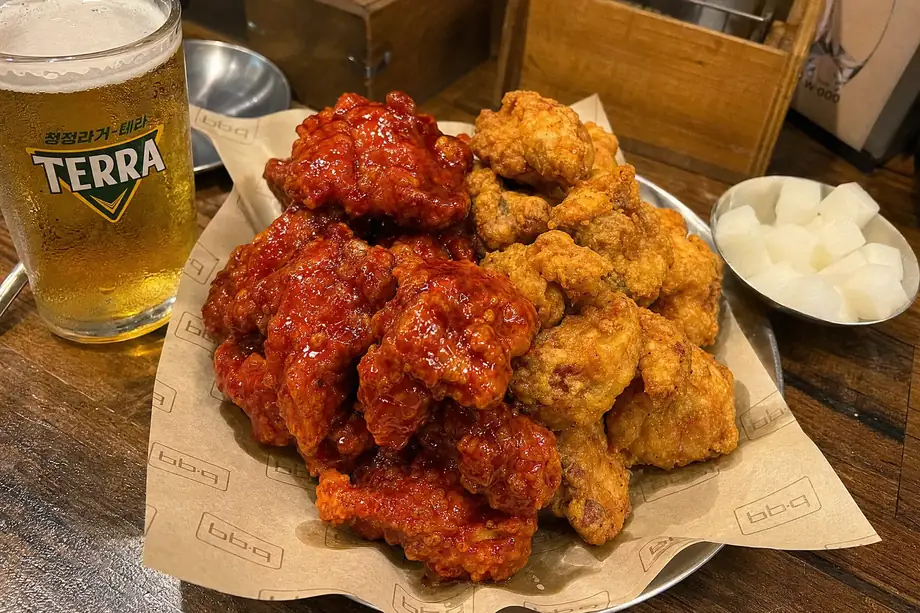
Chi (치) from chicken + maek (맥) from maekju (맥주, beer). This combination became a cultural institution in Korea, and it's genuinely one of the best things you'll eat here. Korean fried chicken has an incredibly thin, shatteringly crispy coating — completely different from Western fried chicken. You can get it plain (original), coated in sweet-spicy yangnyeom sauce, or garlic butter. Order half-and-half to try both.
Do Koreans actually eat this? Absolutely. Along with samgyeopsal, chimaek is one of the most genuinely Korean things on this list. Koreans order chicken delivery while watching sports, eat it after work, and it's a staple of any casual night out. There are more fried chicken restaurants in Korea than McDonald's locations worldwide. That tells you everything.
- Price range: ₩18,000–25,000 for a whole chicken (serves 2–3)
- Major chains (all widely available): BBQ Chicken (바비큐), BHC, Kyochon (교촌), Nene Chicken (네네치킨), Cheogajip (처갓집) — each has its own signature sauce and style. Hard to go wrong with any of them
- Watching calories? Try Goobne Chicken (굽네치킨) — oven-roasted instead of deep-fried, significantly less oil. Or look for gui chicken (구운 치킨) options at other chains. Same great flavor, lighter on the stomach
- Must-order side: Pickled white radish cubes (치킨무, chikin-mu) — it comes free, it's essential
- Delivery option: Koreans mostly order this via Baemin (배민) app for delivery — you can try it too!
💡 Rian's Tip
Honestly? The franchise chains are great. Most Koreans order from them regularly — delivery to your accommodation is totally normal and easy. If you want to eat in, find a neighborhood chikin hof (치킨 호프), a casual pub that serves chicken and beer. No English menu, local crowd, usually excellent. Skip the Instagram spots with hour-long lines.
🌶️ #3 Tteokbokki (떡볶이) — Spicy Rice Cakes
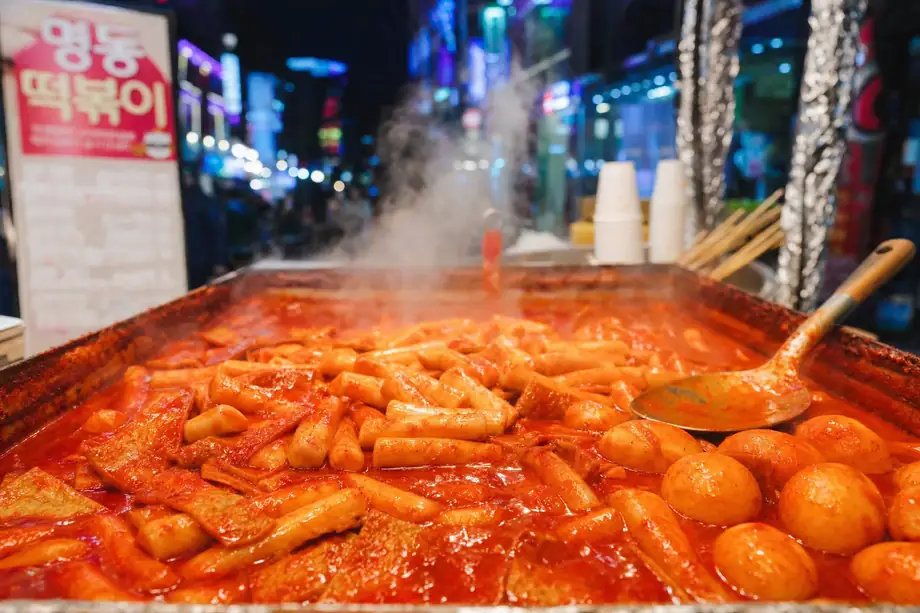
Chewy cylindrical rice cakes swimming in a glossy, fiery red gochujang (chili paste) sauce. This is the most iconic Korean street food, and you'll find it everywhere — from street carts in Myeongdong to sit-down restaurants to convenience stores. It's sweet, spicy, and deeply satisfying in a way that's hard to explain until you've had it.
Do Koreans actually eat this? Absolutely — and this is important to understand: tteokbokki is a genuine Korean soul food. It's not just street food. Koreans eat it when they're stressed, when they're craving something comforting, when they need a quick snack after school or work. In fact, many Koreans will tell you: when dieting, they can resist fried chicken — but tteokbokki? That's the one they can't give up. The calories are real, but so is the craving.
One caveat: the tourist-area tteokbokki (especially in Myeongdong) is often sweeter and milder than what Koreans actually eat. Real Korean tteokbokki is spicier and less photogenic. If you want the real deal, find a bunsik (분식) place — a casual Korean snack shop — in a non-tourist neighborhood.
- Price range: ₩3,000–6,000 at street carts, ₩8,000–12,000 at restaurants
- Spice level: Medium-high. If you're sensitive to spice, ask for "덜 맵게" (deol maepge = less spicy)
- Order with: Eomuk (어묵, fish cake skewers) and twigim (튀김, fried snacks) — the classic combo
💡 Rian's Tip
Skip the tourist-heavy spots. Neighborhood bunsik joints and even franchise chains (like Dokkki or Yopokki) are often just as good — and priced fairly. The best approach: Google "떡볶이" near wherever you're staying and look for places with lots of Korean reviews. We'll do a full deep-dive on tteokbokki spots in a future post.
🍳 #4 Bibimbap (비빔밥) — Mixed Rice Bowl
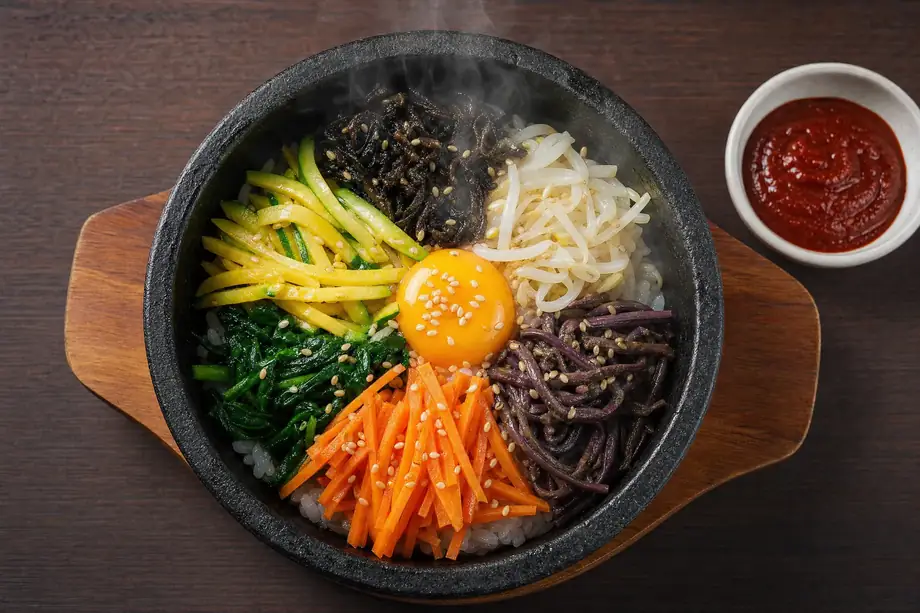
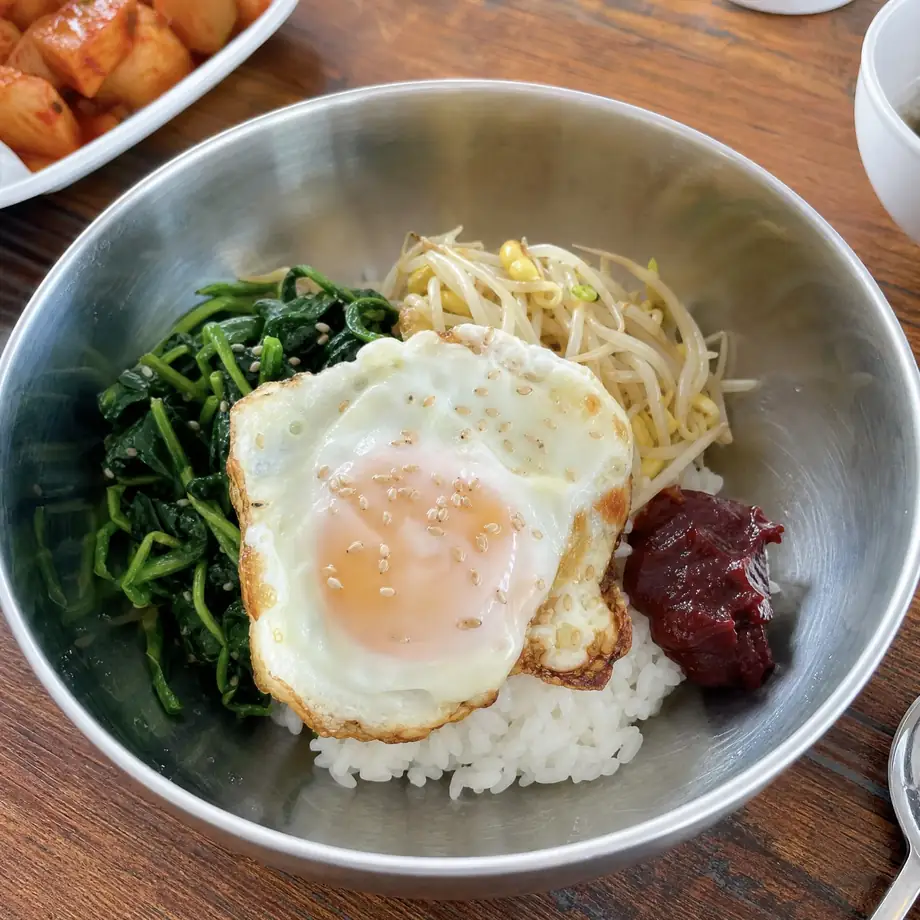
A bowl of rice topped with colorful seasoned vegetables, a fried or raw egg, and gochujang sauce — then you mix it all together. It looks beautiful, it's balanced, and it's one of the most internationally recognized Korean dishes. The dolsot (돌솥) version — served in a sizzling hot stone pot — is especially worth trying. The heat from the stone creates a crispy, golden rice crust at the bottom called nurungji (누룽지), and that nutty, toasty layer is honestly the best part of the whole bowl. Don't skip it.
Do Koreans actually eat this? Here's the nuanced truth: Koreans do eat bibimbap, but maybe not the way you'd expect. At home, it's actually a practical dish — a way to use up leftover side dishes and vegetable scraps. You throw together 2–3 things you have in the fridge, add rice and gochujang, mix it up. Quick, easy, zero waste. The elaborate restaurant version with 7+ colorful toppings? That takes real effort to prepare, so most Koreans save that for a trip to Jeonju (전주), the city where bibimbap originated and where it's taken seriously as a culinary art form. If you're in Jeonju, it's absolutely a must.
Beyond the classic version, bibimbap has many specialty variations worth knowing about — and these are the ones Koreans genuinely get excited about:
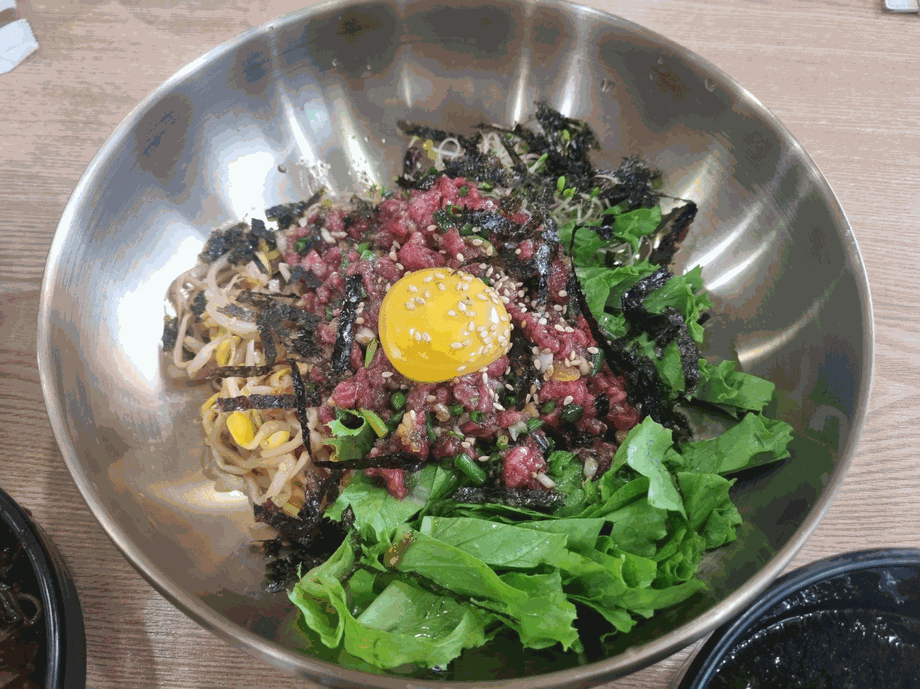
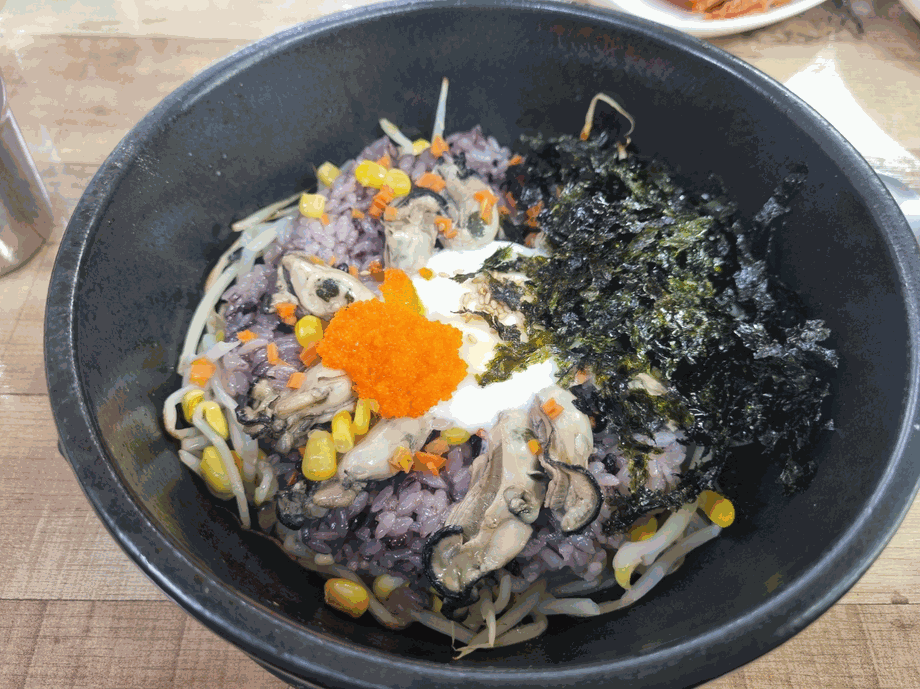
Yukhoe Bibimbap (육회비빔밥) — raw beef tartare on top of bibimbap, with an egg yolk in the center. The beef is seasoned with sesame oil, garlic, and soy sauce. It sounds adventurous, but the flavor is incredibly clean and rich. This is one of those dishes that Koreans genuinely love and seek out. Gul Bibimbap (굴비빔밥) — oyster bibimbap, often served with purple multigrain rice. A coastal specialty that's become popular nationwide. The oysters add a briny, oceanic depth that's completely different from the standard version.
- Price range: ₩10,000–15,000 at a proper restaurant; yukhoe/gul versions may be slightly more
- Best version: Dolsot bibimbap (돌솥비빔밥) for the crispy nurungji crust — or Jeonju-style (전주비빔밥) if you're visiting Jeonju
- How to eat it: Mix everything thoroughly before eating. The nurungji at the bottom of the stone pot? Scrape it up — that's the reward for waiting
- Vegetarian & diet-friendly: Bibimbap is one of the most flexible Korean dishes. Skip the meat ("고기 빼주세요"), reduce the rice, or go full vegetable-only. Many Koreans eat bibimbap as a diet meal — steamed vegetables (namul), a fried egg, a small amount of gochujang, and less rice. All the nutrition, lighter on the carbs
- Rian's take: I sometimes skip the rice entirely and just eat the namul with egg and gochujang. Basically a Korean grain bowl without the grain — and it works
🍲 #5 Kimchi Jjigae (김치찌개) — Kimchi Stew
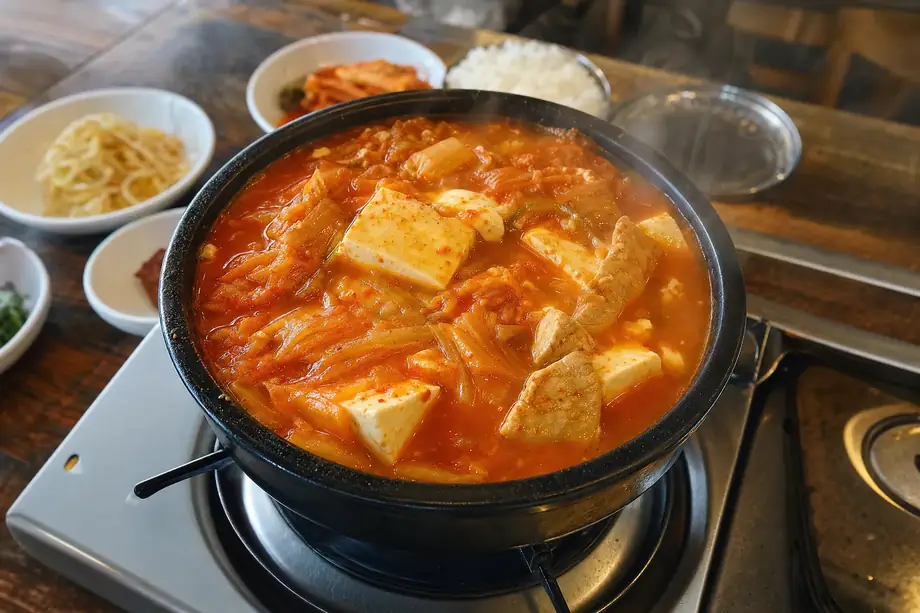
A bubbling pot of deeply fermented kimchi, soft tofu, and pork in a rich, savory-spicy broth. This is Korean comfort food at its most honest — the kind of thing you eat when it's cold outside, when you're tired, when you need something that feels like home. It arrives still boiling at your table, served with a bowl of white rice on the side.
Do Koreans actually eat this? This is probably the most genuinely Korean dish on this entire list. Every Korean grew up eating this. It's the dish that makes Koreans homesick when they're abroad. It's not fancy, it's not Instagram-worthy, but it might be the most honest taste of Korea you'll find.
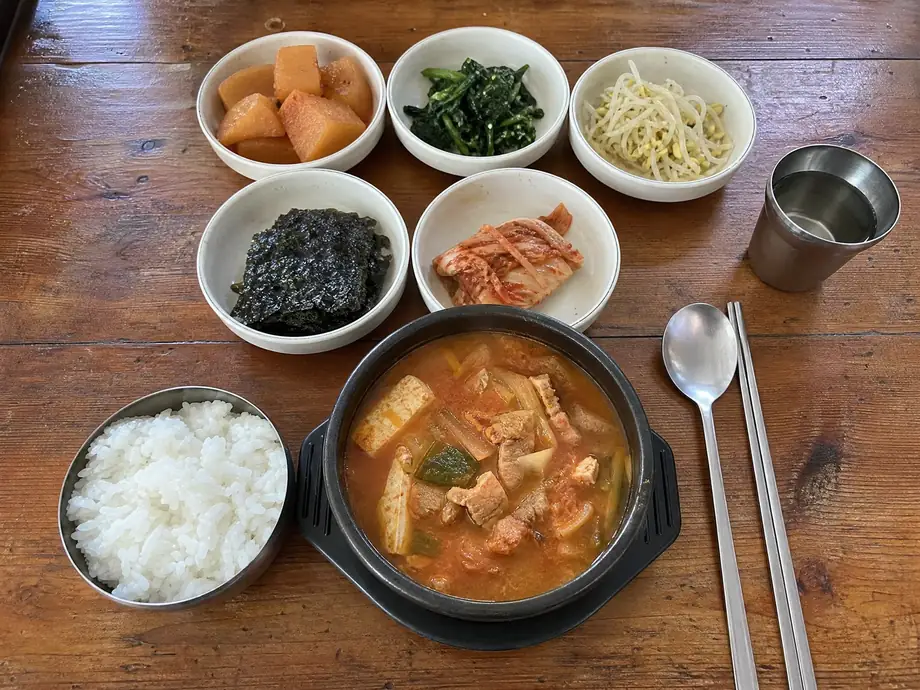
Honest truth from a Korean: kimchi jjigae is so easy to make at home that most Koreans don't specifically go out to order it. You'll most often find it at baekban restaurants (백반집, Korean set-meal diners) — simple, affordable places where you get a main dish served with rice and a rotating spread of side dishes (banchan), all for around ₩8,000–10,000. It's where office workers eat lunch. It's real, unpretentious Korean food at its most everyday.
But here's the thing: when you find a place that does really exceptional kimchi jjigae — usually with perfectly aged kimchi (묵은지, mugeun-ji) and good quality pork belly — it's absolutely worth going out of your way for. Search Google Maps for "김치찌개 맛집" near you and trust the Korean reviews.
- Price range: ₩8,000–12,000 at a baekban place; more at a specialty restaurant
- Best version: Made with well-aged kimchi (묵은지, mugeun-ji) and pork belly — deeper, richer, more complex flavor
- What is baekban (백반집)? A Korean set-meal diner — main dish + rice + multiple rotating side dishes for one fixed price. The most everyday, honest Korean dining experience you can have
- How to eat: Spoon some broth over your rice. Mix. Repeat. This is the way.
🐔 Bonus: Dakgalbi (닭갈비) — Spicy Stir-Fried Chicken
If you're willing to take a short trip outside Seoul, Dakgalbi is absolutely worth it. This spicy stir-fried chicken dish originated in Chuncheon (춘천), a scenic city about 1 hour from Seoul by ITX train — and the city takes it seriously. There's an entire alley called Dakgalbi Street lined with restaurants, each competing to have the best version.
The dish is chicken marinated in gochujang (chili paste) with a hint of curry powder, stir-fried on a large iron griddle with rice cakes, sweet potato, cabbage, and green onion. At the end, you add rice to the leftover sauce and fry it all together — that final fried rice (볶음밥) is the highlight that everyone talks about. You can also add ramyun noodles (라면사리) or udon noodles (우동사리) instead — personally, I prefer the ramyun sari for the chewier texture and how it soaks up the sauce.
Two styles to know: The most common is cheolpan dakgalbi (철판, iron griddle) — this is what you'll find in Seoul too. But in Chuncheon, you can also get sutbul dakgalbi (숯불, charcoal-grilled), which is the older, more traditional style. Both are great; the charcoal version has a smokier flavor.
These days, many dakgalbi restaurants offer fusion add-ons — cheese is the most common, and it genuinely works well for toning down the heat. Some places now come with cheese as standard; others offer it as an add-on. Check the menu. Dakgalbi is available across Korea, not just Chuncheon — but the Chuncheon version is the benchmark.
- Can't handle spice? Add cheese (치즈 추가, chijeu chuga) — tones down the heat and adds creaminess. Not traditional, but it works. Check if the restaurant offers it first
- Price range: ₩12,000–16,000 per person in Chuncheon; slightly more in Seoul
- Getting to Chuncheon: ITX Cheongchun train from Yongsan or Sangbong station — about 1 hour, ₩6,700. Easy day trip
- Don't forget: Order the fried rice (볶음밥, bokkeumbap) or ramyun sari (라면사리) at the end — it's the best part
💡 Rian's Tip
Dakgalbi is available in Seoul too, but if you're going to do it, do it in Chuncheon. The competition between restaurants there is fierce, and the quality shows. Also — Chuncheon itself is beautiful. Lakes, mountains, clean air. It's worth the trip even without the food.
🗺️ Quick Reality Check: Do Koreans Actually Eat This?
Here's something most food guides won't tell you: a lot of what foreigners associate with "Korean food" is either a tourist-area version, a K-drama prop, or something Koreans eat occasionally — not daily. Here's a quick honest breakdown:
| Food | Do Koreans Actually Eat It? | Verdict |
|---|---|---|
| Korean BBQ (삼겹살) | ⭐⭐⭐⭐⭐ | 100% real — a true Korean staple |
| Chimaek (치맥) | ⭐⭐⭐⭐⭐ | 100% real — ordered weekly by most Koreans |
| Tteokbokki (떡볶이) | ⭐⭐⭐⭐⭐ | Real soul food — avoid tourist versions |
| Bibimbap (비빔밥) | ⭐⭐⭐ | Real but occasional — home version is simple |
| Kimchi Jjigae (김치찌개) | ⭐⭐⭐⭐⭐ | Most Korean dish on this list — homesick food |
| Dakgalbi (닭갈비) | ⭐⭐⭐⭐ | Real — occasional dining out, best in Chuncheon |
| Dak Hanmari (닭한마리) | ⭐⭐⭐ | Real — but a special occasion dish, not everyday |
| Han River Ramyun (한강 라면) | ⭐⭐⭐⭐ | The experience is the point — ramyun itself is real soul food |
| Cheese corn dogs | ⭐⭐ | Mostly tourist food now |
| Dalgona candy (달고나) | ⭐ | Squid Game effect — not real daily food |
💡 Rian's Tip
Want to eat like an actual Korean? Walk away from the main tourist streets (Myeongdong, Insadong, Hongdae main strip) and find a side street with Korean office workers eating lunch. Follow them. That's where the real food is — and it's usually cheaper too.
📱 Essential Korean Food Vocabulary
You don't need to speak Korean to eat well in Korea — but knowing a few words goes a long way. Here are the ones that actually matter:
- 이거 주세요 (igeo juseyo) — "I'll have this one" (point at the menu)
- 맵지 않은 거 있어요? (maepji anheun geo isseoyo?) — "Do you have something not spicy?"
- 고기 빼주세요 (goegi bbaeju-seyo) — "No meat please" (for vegetarians)
- 맛있어요! (massisseoyo!) — "It's delicious!" (say this and watch the owner's face light up)
- 계산해 주세요 (gyesan-hae juseyo) — "Check please"
- 포장해 주세요 (pojang-hae juseyo) — "To go please"
Want to actually read Korean menus instead of just pointing? It's easier than you think — the Korean alphabet (Hangul) can be learned in about 90 minutes. Check out our complete guide to Hangul and you'll be reading menus by the end of your first day in Seoul.
Written by Rian
Korean & English Educator · gachistudio