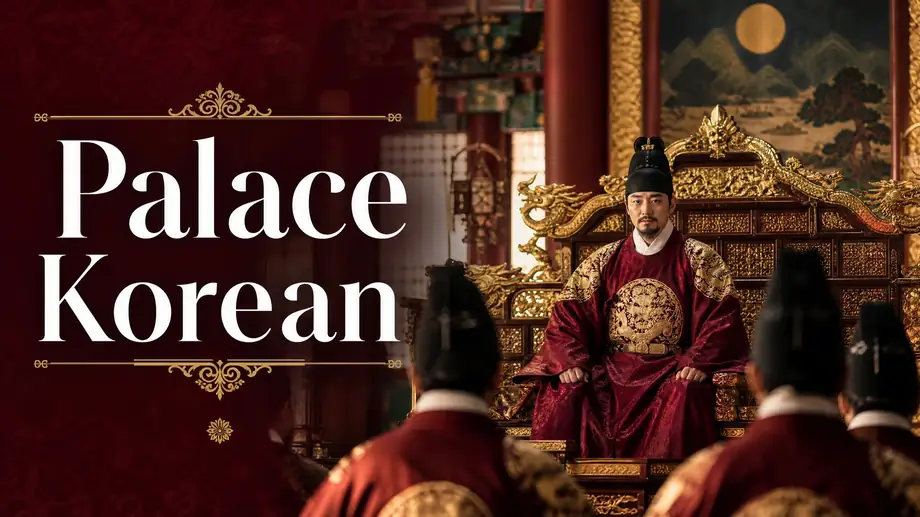
If you've watched Bon Appétit, Your Majesty (폭군의 셰프), you've probably noticed that the king talks in a completely different way from everyone else. It sounds almost like a different language — and in some ways, it is! 👑
This is 궁중 한국어 (Palace Korean) — the formal speech used in the Joseon royal court. In Part 2, we'll break down 5 real expressions from the drama, explain why they sound so different from modern Korean, and show you what people actually say today.
📌 Quick Note Before We Start
Palace Korean (궁중어) was used in the Joseon dynasty (1392–1897). Almost none of it is used in everyday modern Korean — but understanding it makes historical dramas (사극) so much more fun to watch! Think of it like watching Shakespeare in English. 🎭
📺 tvN Official Clip — EP.4 scene with the king and his attendants
👑 Expression 1: 연유가 무엇이냐? (What is the reason?)
The king demands an explanation from his attendants using royal speech. The word 연유(緣由) is a Sino-Korean word meaning "reason" or "cause" — very formal and literary, not used in daily conversation today.
🎬 Real Drama Line
"연유가 무엇이냐?"
"What is the reason?" / "Why is that?" (royal speech)
🗣️ How Koreans Actually Say It Today
왜요? (wae-yo) — "Why?" — the most common, casual-polite way
왜 그래요? (wae geu-rae-yo) — "Why are you like this?" — slightly more expressive
이유가 뭐예요? (i-yu-ga mwo-ye-yo) — "What's the reason?" — more formal, used in work/school
왜 그런 거야? (wae geu-reon geo-ya) — casual, with close friends
💡 Rian's Tip
왜요? alone can sound a bit blunt in Korean. Adding context makes it more natural: "왜 그런 거예요?" or "무슨 일이에요?" (What's going on?) are softer and more commonly used in real conversations. ✅
🙇 Expression 2: ~하옵니다 (Reporting to the king)
When officials report to the king, they use the ending ~하옵니다. The 옵 part is an archaic honorific infix that no longer exists in modern Korean — it was used only when speaking to royalty or in extremely formal court situations.
🎬 Real Drama Line
"느껴진다 하옵니다." / "모르겠다 하옵니다."
"He says he feels it." / "He says he doesn't know." (official reporting to king)
🗣️ Modern Korean Speech Levels — What Actually Exists Today
~하옵니다 ❌ — DEAD. Only in historical dramas/period films.
~합니다 / ~입니다 ✅ — Formal polite. Used in: business presentations, news broadcasts, official announcements, job interviews. "안녕하십니까? 저는 김민준입니다."
~해요 / ~이에요 ✅ — Everyday polite. Used with: strangers, older people, colleagues you're not close to. "안녕하세요! 저는 민준이에요."
~해 / ~야 ✅ — Casual (반말). Used with: close friends, younger people, family. "나 민준이야."
💡 Rian's Tip — The Most Important Rule in Korean Politeness
When in doubt, use ~해요. It's polite enough for almost any situation and sounds natural. Switching to ~합니다 is for formal settings (presentations, official emails). Never use 반말 (~해/~야) with someone you've just met — it can come across as rude! 😅
👤 Expression 3: 과인 vs 나 (I / Me — royal vs modern)
The king never says 나 (na) or 저 (jeo) for "I" — he uses 과인(寡人), which literally means "a person of few virtues" — a humble royal title used only by kings. It's completely extinct in modern Korean.
🎬 Real Drama Line
"지금 과인에게 '그쪽'이라 한 것이냐?"
"How dare you address me (the king) in that manner?"
🗣️ How to Say "I" in Modern Korean
과인 ❌ — DEAD. King only, Joseon era.
저 (jeo) ✅ — Polite "I". Use with strangers, elders, in formal situations. "저는 학생이에요." (I'm a student.)
나 (na) ✅ — Casual "I". Use with friends, family, people younger than you. "나 배고파." (I'm hungry.)
저희 (jeo-hui) ✅ — Polite "we/our". "저희 회사는..." (Our company is...)
💡 Rian's Tip — 저 vs 나
This is one of the first things learners get confused about! Simple rule: if you're using ~해요 / ~합니다 endings → use 저. If you're using 반말 (~해 / ~야) → use 나. Mixing them (나 + 해요) sounds awkward to native speakers. 😅
🗣️ Expression 4: ~이냐? (Royal question ending)
The king ends his questions with ~이냐? or ~느냐? — these are archaic question endings used only by superiors speaking down to inferiors in the Joseon era. Today, they exist only in dramas and literature.
🎬 Real Drama Lines
"걸인이냐?" — "Are you a beggar?"
"무엇을 하느냐?" — "What are you doing?"
🗣️ Modern Question Endings
~이냐? / ~느냐? ❌ — DEAD. Only in sageuk dramas.
~이에요? / ~예요? ✅ — Polite question. "학생이에요?" (Are you a student?)
~야? / ~이야? ✅ — Casual question. "학생이야?" (Are you a student? — to a friend)
~입니까? ✅ — Very formal question. Used in official/business settings. "성함이 어떻게 되십니까?"
✨ Expression 5: ~구나 (Exclamation ending)
This is the one expression from palace Korean that IS still used in modern Korean! The ~구나 ending expresses a moment of realization or discovery — like saying "Ah, I see!" or "Oh, so that's it!" It's used when you just understood something new.
🎬 Real Drama Line
"걸인이로구나."
"Ah, so you're a beggar." (king's realization)
🗣️ ~구나 in Modern Korean — Still Very Much Alive! ✅
그렇구나! (geu-reo-ku-na) — "Oh, I see! / Ah, so that's it!" — said ALL the time in Korean conversations
맛있구나! (ma-si-gu-na) — "Oh, it's delicious!" — said by elders/parents to younger people
힘들었구나 (him-deu-reo-gu-na) — "Oh, you must have had a hard time" — empathetic, warm
벌써 왔구나! (beol-sseo wat-gu-na) — "Oh, you're already here!" — surprised realization
💡 Rian's Tip — ~구나 is the "Aha!" of Korean
그렇구나 is one of the most natural responses in Korean conversation. When someone explains something to you and you understand, say "아, 그렇구나!" — it shows you're listening and engaged. Much better than just saying "응" (uh-huh)! ✅
📋 Quick Reference: Palace Korean vs Modern Korean
| Palace Korean (Drama) | Still Used? | Modern Korean (Real Life) |
|---|---|---|
| 연유가 무엇이냐? | ❌ No | 왜요? / 이유가 뭐예요? |
| ~하옵니다 | ❌ No | ~합니다 (formal) / ~해요 (everyday) |
| 과인 | ❌ No | 저 (polite) / 나 (casual) |
| ~이냐? / ~느냐? | ❌ No | ~이에요? (polite) / ~야? (casual) |
| ~구나 | ✅ YES! | 그렇구나! / 힘들었구나 (still very natural) |
In Part 3, we'll look at the everyday emotional expressions — the ones the modern chef uses that feel much more relatable and useful for real Korean conversations! ❤️
📚 Series Navigation
- Part 1: Food Expressions 🍖
- Part 2: Palace & Formal Korean ← You are here
- Part 3: Everyday Emotions ❤️